Author Archives: ms.grammarian

I love presents. And Jane Austen.

With only twenty-three shopping days left until my birthday, I thought I would just make the world aware that the (quite beautiful) turquoise and gold ring which belonged to Jane Austen is going up for auction at Sotheby’s (guide price between 20 and 30 thousand pounds). Upon discovering this last Friday, I did the natural thing: I called my mother to tell her about it.

Seeing this ring and reading about it reminded me of something that Barbara Pym is quoted as saying, after a visit to Jane Austen’s family home.

I put my hand down on Jane’s desk and bring it up covered with dust. Oh that some of her genius might rub off on me! One would have imagined the devoted female custodian going round with her duster at least every other day.

And also Harper Lee:

…in other words, all I want to be is the Jane Austen of South Alabama…

Exactly.

In lieu of the real thing, plagued as I am with inherited ancestral practicality, exact reproductions would be perfectly acceptable to me, just in case anyone was wondering.

True Confessions of Graduate School

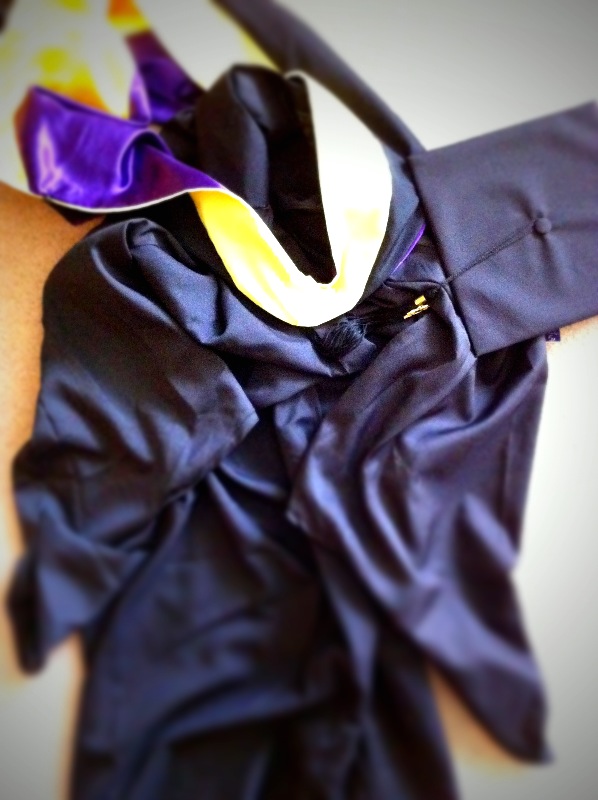
After three years, turning in the final assignment of graduate school turned out to be an anticlimax. I think I expected enormous relief, maybe manifesting itself in spontaneous tears of joy or uncontrollable giggling, but in some ways it felt better to be almost done than to be actually done.

There have been a few moments since then where it seemed to really sink in that I am done with homework, probably forever (I hesitate to promise, given my track record). One was the first Saturday with no homework hanging over my head. Another happened at the grocery store this week, when I purchased two glossy magazines and realized I didn’t need to feel guilty about reading them. (In school, I probably still would have bought and read them, but I would have felt guilty the whole time about the school reading that wasn’t getting done.)

But if there’s one thing I hope I learned in the whole experience of grad school, I hope I learned that it’s important to stop and consider, to take a pause before responding or going headlong into something without figuring out first if it’s right. This may actually have nothing to do with graduate school and everything to do with getting to the end of my 20s, but they’re inextricably linked in my mind. But since I’m feeling confessional (it must be the absence of all that guilt!), I thought I’d put together a highlight reel of my graduate school “true confessions”.

  • In some ways, getting my undergraduate degree in accounting was harder than getting my MLIS.
  • Every time a phrase to the effect of “If I can’t do [insert school assignment] in [insert delusionally reasonable time frame], then why am I in grad school?” left my mouth, I lived to regret it.
  • “…by no means all paragraphs are well written.” Indeed, Mr. Patrick Wilson (author of said quote), and especially so if they appear in an article in a scholarly journal. At one point in time, I was convinced that there was an unwritten rule establishing a minimum number of typos and/or grammatical errors an article had to contain in order for it to qualify as graduate school material.
  • The use of Latin phrases like ab initio is highly annoying when done by other people and highly satisfying when done oneself.
  • Ontology and deontology aren’t opposites, which made reading for understanding, when you’re trying very hard to stay awake, more challenging than seemed absolutely necessary.
  • A professor who uses the words “ontology” and “deontology” extensively still may not be able to choose correctly between “principle” and “principal”.

Inevitably, though, people’s first question to me has been: “What’s next?” Well, I’m taking a pause. I’m going to do some volunteer work with libraries this summer, and I’m going to learn how to cook, for reals and like a grownup, with measuring cups and meats. I’m going to give my blog more attention, and I’m going to spend as much time as possible with my best friend before she moves really far away in September. And after all that, I’ll start looking seriously for a library job.

And, by golly, somewhere in there I’m going to finish Middlemarch.

Regency Slang is an Acquired Taste

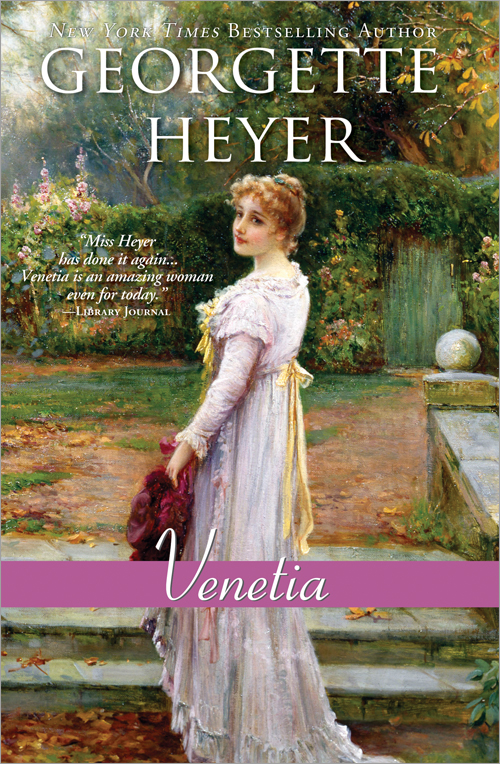
image via Sourcebooks

I am highly suspicious of all works by authors described as “the next best thing to reading Jane Austen” (unless that author is Barbara Pym), so I was a reluctant latecomer to the novels of Georgette Heyer.

My first attempt at reading one of Georgette Heyer’s books was False Colours. I made it about fifty pages in before I gave up; the vapid mother, improbable identical twin plot, and ultimately the extensive use of Regency slang overcame my patience. For me, the language of Heyer will ever be an acquired taste, and I don’t recommend starting with one of her books that really indulges in it until you’ve acquired it. Eventually, you may even embrace it, and find yourself rejoicing at any opportunity to incorporate phrases like “There’s no need to fly up into the boughs!” into your everyday conversation. (So far, I’ve had only one opportunity, but I remain at the ready, should the occasion call.)

A few years after that first attempt, in a readers’ advisory class in library school, one of my classmates recommended The Grand Sophy to me. I pooh-poohed. I thought I knew better. But another classmate urged me very articulately to reconsider, saying that she didn’t know who was responsible for choosing the order or frequency with which Heyer novels are republished, but someone should really take that person in hand. That following summer, when the stress of my sister getting married and moving halfway across the country was rising, I gave The Grand Sophy a try. If ever there was a time for escapist Regency fiction, it was the summer of 2010.

I’ve written elsewhere about The Grand Sophy, Frederica, and Arabella. What I didn’t say there, though, was that I read The Grand Sophy in less than a week while on my sister’s bachelorette trip in San Francisco; I finished it on the flight home, and immediately upon finishing it, still on the plane, downloaded Frederica to my kindle.

Since reading those three, I’ve gone on to read many more, including: The Nonesuch, Lady of QualityThe Reluctant Widow, Talisman Ring, and, best of all, Venetia. Venetia is far and away my favorite Georgette Heyer novel. Featuring the two most well-read and well-spoken of Heyer’s characters, it’s the sparkliest of the sparkly banter – and happily, unlike some of Heyer’s novels, our hero and heroine get to spend a lot of time together.

I like all of Heyer’s older, “on the shelf” heroines, but Venetia is my favorite probably because I identify the most with her character. She’s a prettier, much more fun and witty version of myself, like how I imagine myself to be on my best days, if all my lines were previously scripted and I had met a worthy opponent. And speaking of worthy opponents: Lord Damerel is a shining example of that ever-so-attractive archetype, the rake seeking redemption (even if he isn’t quite aware of it yet).

But this post isn’t just about Venetia as a novel and how I reread my favorite parts at regular, probably embarrassingly frequent, intervals; it’s also about Venetia, the audiobook, read by Richard Armitage. It’s simply excellent, and worth checking out whether or not you’ve read the novel.

If ever they make a movie version of Venetia, which is a marvelously good idea, they really need to have Richard Armitage play Lord Damerel. I consider Mr. Armitage to be the nonpareil portrayer of conflicted emotions, smoldering glances, and eyes that are “smiling yet fierce” (see North and South); he really is the only choice. And obviously, I would play Venetia. I have no acting training, but I believe, in this case alone, the sheer force of my enthusiasm and familiarity with the story would carry the day.