Category Archives: Books, Reviews, and Reading

A Defense of Jane Austen

Or, George Eliot versus Jane Austen: By a Partial, Prejudiced, and Ignorant Admirer
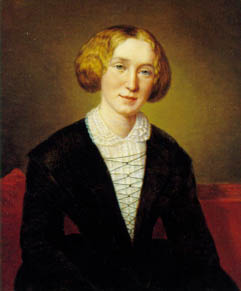
George Eliot at 30

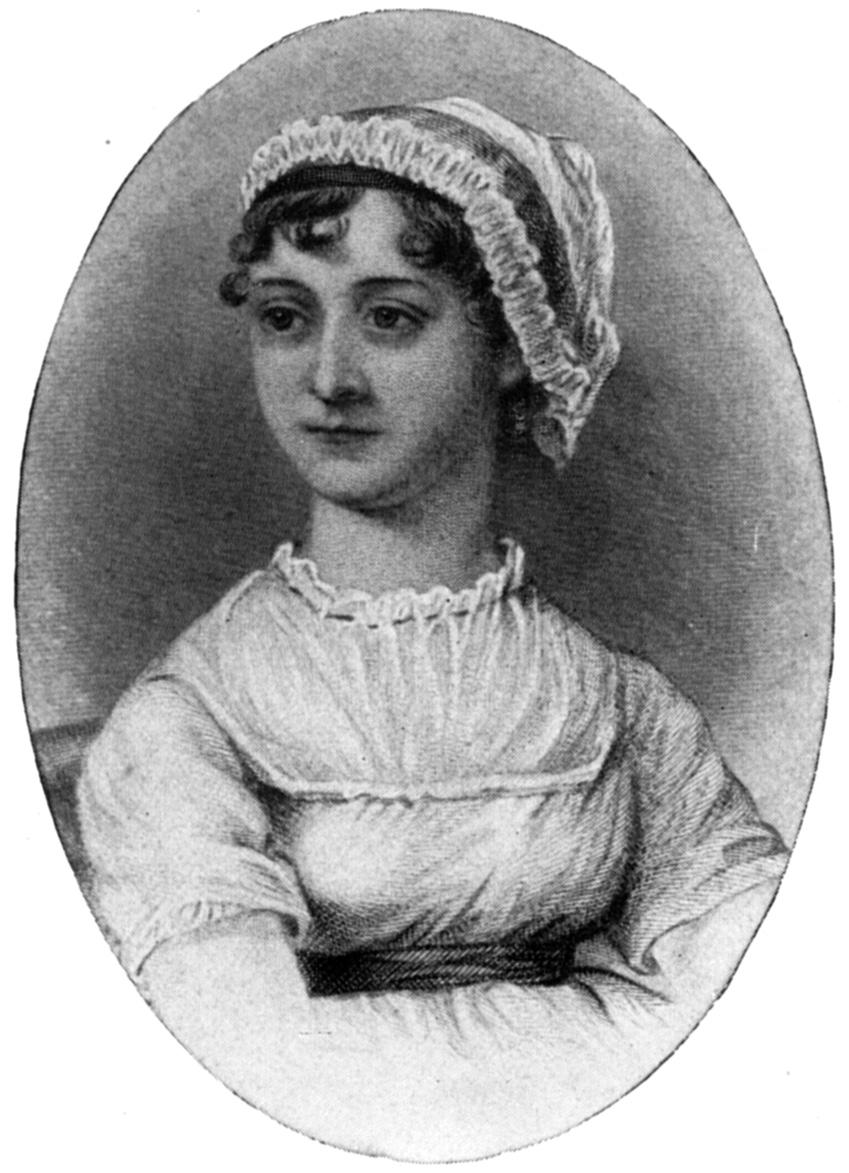
Jane Austen

I recently read an article in The New Yorker called “Middlemarch and Me”, by Rebecca Mead, about George Eliot’s life and works and the author’s relationship with them over the years. Near the middle, Ms. Mead contrasts the differing popularity levels of Jane Austen and George Eliot.

This is probably as good a time as any to confess that I am, entirely unnecessarily and ridiculously, hyper-protective of Jane Austen and her novels. No doubt this issue will come up again on this blog, so it’s best that you know this, dear reader, and the sooner, the better.

Most likely because of my nutty protectionist philosophy concerning Jane Austen, I find that whenever people talk about her work in terms of its widespread popularity, it always seems to me as though there is some kind of implied insult. I am sure that wasn’t what Ms. Mead intended by describing Austen’s novels with the phrase “crystalline, comic novels of medium length.”

Mead continues:

“Eliot admired Austen…but George Eliot…went on to surpass her precursor. She is as adept as Austen at the ironic depiction of high and middle-class society…But Eliot’s satire, unlike Austen’s, stops short of cruelty. She is inveterately magnanimous, even when it comes to her most flawed characters; her default authorial position is one of pity…A reader marvels at Jane Austen’s cleverness, but is astonished by George Eliot’s intelligence.”

I sat stupefied. Cruel? My Jane Austen, cruel?

I have to preface the rest with a caveat: I am significantly less acquainted with George Eliot’s work than with Austen’s: my entire exposure is comprised of a class I took in the “later 19th century English novel” in which Daniel Deronda was assigned. A moment of truth: I couldn’t finish it. Gwendolen Harleth, the principal character, was impossible for me to like. She was selfish, stubborn, spoiled. Significantly lacking in wisdom, with one poor choice after another she saddled herself with a life of misery.

I’m wondering at Mead’s assertion related to Eliot’s “pitying” even her most flawed characters; wondering whether authors should stand in positions of pity over their characters. Positions of sympathy, yes: sympathy which expresses understanding for what and how a character feels, the thought of having been in a character’s place, of having felt her sorrows and her joys. Pity seems rather to convey a sense of superiority, of feeling the pain of another’s position without the acknowledgment of sharing in that character’s position.

In Daniel Deronda, Gwendolen ultimately does grow as a character, but the journey is long and arduous; her ending, while just, is not happy in any traditional sense.  One might argue that Austen, by giving her characters both just and happy endings, displayed more magnanimity than Eliot.

But I struggle the most with what Mead describes as Austen’s cruelty. Certainly Austen never flinched from an honest rendering of the ridiculousness residing in any one of us, and one notices her cleverness, reading her novels. But I also admire the intelligence in her observations of the world and the people in it. Jane Austen noticed things; and it is these details, captured with her sense of good humor in sympathy with human nature, which make her work so dear.

In my partial, prejudiced, and ignorant opinion, of course.

Article citation: Mead, Rebecca. “Middlemarch and Me.” The New Yorker 14 and 21 February 2011: 76-83. Print.

Mind Your Zs and Qs

In spite of a pretty fervent dislike of the idea of book groups, I recently decided to participate in one. In February, each of us read a different “elastic realism” book, and then we all got together to talk about the different books we read. It was great fun. My elastic realism choice was China Miéville’s The City and the City, which is essentially a murder mystery set in two fictitious cities, Besźel and Ul Qoma.

These two cities occupy the same geographical space, but are very separate and distinct places: to live in Besźel is to speak Besź, to see only Besźel, and to unsee and unhear everything and everyone living in Ul Qoma, who might be passing by on the street. Besź people dress differently than Ul Qomans, they have different postures, they walk differently, and they speak different languages. The separation between the cities is maintained by this strict code of unseeing, and for those who violate? Breach is watching, and waiting.

For a Besź citizen to visit an Ul Qoman neighbor – who might even live in the same apartment building – he would have to travel to the center of Besźel, seeing only Besź people and buildings and speaking only Besź, all the way to Copula Hall, the only official border crossing between the cities. After passing through the border into Ul Qoma, he would return over many of the same streets, differently named, seeing only Ul Qoman people, all the way back to perhaps the same building he was in before leaving Besźel to visit his neighbor. Of course, such a visit would be highly unlikely, given the tension between the two cities.

While reading this book, I found myself driving home from work and trying to “unsee” someone passing on the street, because the whole idea was so curious to me. (It didn’t really work out. The amount of thought that went into the process served rather to cement the image in my mind.) (I also found myself thinking how great it was that there were Zs and Qs on practically every page!)

When a body is found, disfigured and abandoned, on an estate in the outer reaches of Besźel, the investigating officer, Tyador, can’t find a single lead in Besźel. One day an anonymous phone call leads the investigation to Ul Qoma, and Tyador must cross into Ul Qoma to assist their police. What begins as a murder investigation soon becomes an investigation into the urban myths surrounding the beginnings of Besźel and Ul Qoma, and into the places that fall between the city and the city.

One of the things I love most about fantasy and science fiction is that it gives us a way of examining parts of our world outside the boundaries of what’s accepted and taken for granted, so expertly described in this article from the Guardian.

So, in the whole of my reading of Mr. Miéville’s book, I was thinking about what he was trying to say. I always think readers’ guides at the backs of book are kind of dorky – like you’re being told what to think about something. But I skimmed through the readers’ guide for this book to see if there were any clues, and the interviewer asked Mr. Miéville whether or not he intended the novel as an allegory. And, essentially, Miéville said no.

But I’ve been thinking about it a lot, and I think it must be, at least partly, about the power we give to others – whether governments, or invisible cities living in the interstice, the space between; and also why we do – whether out of fear, or from an innate need for order, we sacrifice freedom.

The wonderful and generous leader of our book group, who I greatly admire, gets to interview Mr. Miéville about his new book (Embassytown, coming out in May), and she said she would ask him about this allegory question.

In the meantime, I’m still pondering.