Category Archives: Books, Reviews, and Reading

The Hunger Games

Image via Amazon.com

The books in the Hunger Games trilogy are great books to read if you are, in fact, hungry, and on a diet, because they are so hard to put down that you will find it a challenge to get up and get yourself something to eat. True story.

I finished reading the trilogy this month, and unlike the girl in my book group who loved them, I came away from the books with mixed feelings, but no loss of weight, which was a little disappointing.

Caution: SPOILERS AHEAD!!!

The Hunger Games and Catching Fire were both riveting books that moved along at an arresting pace. (I read Catching Fire in approximately 24 hours.) Katniss, with her general distrust and her inability to play to audiences, was likable, and certainly sympathetic; and Peeta was like the dream boy that seemingly everyone but me thought Edward or Jacob (from the Twilight series) was – something like my dream boy, anyway.

My principal complaints about the trilogy came with the third book, Mockingjay.

First I have to confess to being a bit a dismayed by the amount of time that Katniss spent sedated in book three. Throughout the first two books, she found a way through, even in the face of apparently insurmountable sorrow or difficulty. Of course, in the first two books, she had had the freedom to overcome; in book three, that freedom was demonstrably absent – whether because she was sedated or because the people in District 13 weren’t really free. Perhaps that was an irony Suzanne Collins intended us to observe.

Then there was the rather grotesque role that Katniss was required to play – a mascot for the revolution, a living symbol – still a pawn to be used to advance someone else’s agenda, to inspire the people to fight.

I finished the books the same weekend that, a year previously, my sister got married and moved halfway across the country; right at the end of Mockingjay, Prim, the sister whose place Katniss took in The Hunger Games, is killed by a bomb. Katniss’s certain numbness to all the things she’d imagined she would experience in some way together with her sister was particularly poignant. My sister didn’t die – but I could relate in a very small way to that feeling of loss, and the vacancy left behind that will never be quite filled.

But my chief complaint is the way the books ended. You expect characters to emerge from stories changed in some way, and certainly the horrors that Katniss and Peeta witnessed and were at times part of would change them. But Katniss and Peeta were more than changed – they were completely broken, changed beyond recovery. I wasn’t expecting them to regain any sort of childish innocence, but I did hope that their story would end with a more complete happiness. And that, to me, was the most disappointing thing about the books, the idea that there would be no healing, no recovery of their former selves.
Books We Read in School

The subject of books we read in school came up at dinner with friends the other night. As is always expected when individuals of varying life experiences and approaches to life are assembled in one place for the purpose of eating, there were many differing opinions about many things, including reading.

There are actually just a few books that I read in school that I remember. Sadly, I remember considerably more about the “pleasure” reading to which I devoted so much more time. Yes, I went through a “sick books” phase. “Sick books” – in the event you never experienced one – are books in which one of the main characters takes ill (probably leukemia, a brain tumor, or a preexisting heart condition the character has had from birth which only serves to make the story that much more heartbreaking) and probably dies, most likely leaving behind his or her one and only true love. Happily, I did outgrow them.

Here are the assigned books that I actually remember reading (minus one which I omit because I have nothing either entertaining or remotely positive to say about it), and what I remember thinking about them at the time.

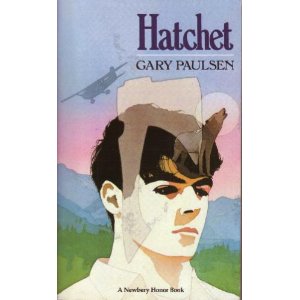
With a cover like this, can you blame me? Image via amazon.com

Hatchet, by Gary Paulson. It was about a boy who was stranded in the woods in the middle of nowhere after a plane crash. I remember long accounts of shelter-building and being very bored indeed.

White Fang, by Jack London. Seriously, the only thing I remember about this is descriptions of blood and violence. And it’s hazy enough that these may be just my lasting impressions rather than actual memories of scenes in the book.

Where the Red Fern Grows, by Wilson Rawls. I remember sitting in the classroom during silent reading time and trying very hard not to cry, and not succeeding. If you can read this book without crying, you may be entirely heartless.

To Kill a Mockingbird, by Harper Lee. This is one of the few books assigned that I actually enjoyed, and it is perhaps one of the first books I read that, once I came to the end, I sat in awe for a few minutes to think about it. It’s still on my list of favorites.

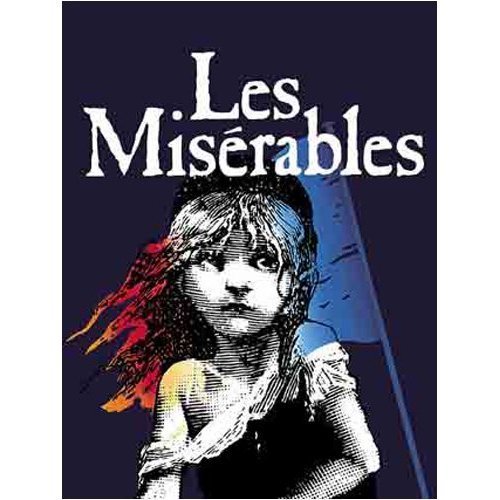
Cosette, or the Little Matchgirl? You decide. Image via amazon.com

Les Miserables, by Victor Hugo. My principal memory is of sitting in my parents’ living room on a Sunday afternoon and finishing the novel, and my parents finding me weeping, which they seemed to find hilarious. These same parents had a copy of this novel on audio cassette, and I can remember how it almost always went with us on road trips. For whatever reason, I had it confused for the longest time with the “little matchgirl” story, because the picture on the front was how I imagined the little matchgirl to look. So you might say I remember hearing this story long before I understood it.

The Heart of Darkness, by Joseph Conrad. In his dedication to Good Poems, Garrison Keillor said, “To all the English teachers, especially the great ones”, and it is only because of one of those great English teachers that I will never forget this book, for more reasons than I probably have time to tell tonight. Thanks, Mr. Robertson.

Me and Harry Potter

Me at the premier

Harry Potter and I share a birthday. Perhaps because of this I feel that he and I, fictional character though he may be, have a special bond.

After the last book came out, I regretted never attending a midnight release party for one of the books; I suppose I thought I’d be surrounded with noisy children, or (worse) be surrounded with noisy children while I, an adult not accompanying a child, attended a midnight book release party alone. (There is definitely something to be said for having people around who enjoy the same things you do – it’s not something to be taken for granted.)

So, with the release of the final movie installment of the Harry Potter saga, I decided I had to attend the midnight premier. I’m not going to talk about the movie, other than to say that somewhere between five and ten Kleenex were used by me alone, and that – finally – they got it right.

This last weekend, with a little too much time alone on my hands, I spent a lot of time thinking about this ten-year journey. I started reading Harry Potter in college; J. K. Rowling had already written four books before I read the first one. But I was immediately hooked. I reread the first book this last weekend, and I was reminded of all the things that made me love the books in the first place.

First there was this lonely, orphaned little boy, who escaped his unhappy life with his guardians; he was kind and brave and easy to love. There was Hagrid and Ron and the Weasley twins. And then I met Hermione, who was rather like a braver version of my eagerly overachieving, rule-abiding, tightly wound self, and as I think we all delight in characters to which we personally relate, so I did in Hermione. It’s nearly impossible to single out characters from this series, though, without instantly thinking of others you should have included, like the strict but fiercely loyal Professor McGonagall, the patient and kind Dumbledore, and Dobby and Kreacher!

But as much as I love Harry and Ron and Hermione, my favorite character of all just might be Severus Snape. Maybe I’m just a sucker for tales of tortured souls and stories of unrequited love, but to me, he’s the unsung, tragic hero, who loved deeply and lost much; whose sacrifices, because not obvious, would never be celebrated as other characters’ were.

Beyond the characters, it was the minutiae of the wizarding world – the many little details and the care taken in their creation; things like butterbeer, the entire village of Hogsmeade, Mrs. Weasley’s charmed dish-scrubber, the tents (and handbags, for that matter) that were bigger on the inside, Hermione’s Society for the Promotion of Elfish Welfare. All of the thought and feeling behind the action of the story – these are the precise things that you don’t get from the movies and which together conspire to make the true magic of the Harry Potter stories.

So, happy almost-birthday, Harry Potter, and thanks for the many magical late nights when I stayed up reading far later than I should have done.

Book Dedication for July, 2011

The final installment of Harry Potter movies was released here in the U.S. yesterday, and all over the Internet I’ve seen lots of commentary about Harry Potter and the phenomenon of Harry Potter. I’ll be writing more on Harry Potter soon, myself.

With all of this, though, it only seems appropriate that this month’s book dedication be from Harry Potter and the Deathly Hallows. (In the book, the dedication is laid out in the shape of a snake; I’m afraid, since I won’t attempt to imitate that here, you’ll have to use your imagination.)

The dedication of this book is split seven ways: to Neil, to Jessica, to David, to Kenzie, to Di, to Anne, and to you, if you have stuck with Harry until the very end.

Dedication from Harry Potter and the Deathly Hallows, by J. K. Rowling. Published in the United States July, 2007, by Scholastic Inc.

Book Dedication for June, 2011

As it happened, I had no birthday party for Lord Peter this month as I so sanguinely hoped.  Hopes are high for next June, which gives all of us plenty of time to find suitable monocles and the rest of our costumery.  Instead, just so he knows I haven’t forgotten about him, here is Dorothy Sayers’s dedication of her first book about Lord Peter.

To M. J.

Dear Jim:

This book is your fault.  If it had not been for your brutal insistence, Lord Peter would never have staggered through to the end of this enquiry.  Pray consider that he thanks you with his accumstomed suavity.

Yours ever,

D. L. S.

Dedication from Whose Body?, by Dorothy L. Sayers.  First published 1923 by Harper and Row Publishers, Inc.