Tag Archives: books

On Memoirs

This week I read an interesting article in New York Magazine about Joan Didion’s newest memoir, Blue Nights. In it, the author, Boris Kachka, talks to Didion about her success with The Year of Magical Thinking and the new memoir. The article is great, if maybe a little sad, and I hope you’ll take a few minutes to read it. Apparently, I’m not alone in saying so; it was one of the most-read “long reads,” according to the magazine’s facebook page:

From facebook.com

There’s so much fodder for discussion in the article:  Kachka quoting Didion from Slouching Towards Bethlehem, that “writers are always selling somebody out”; Didion’s prescience about the hippy movement and the impact it would have on society as a whole (what, as a result, might be “sacrificed…on the altar of universal love and self-fulfillment”); the honest questions Kachka describes Didion as asking of herself in Blue Nights – about being a parent, and being a good parent.

But I wanted to focus this post on something Kachka says in the article, that “Didion has always maintained that she doesn’t know what she’s thinking until she writes it down.” As a person who has kept a journal for the majority of my life, I can relate. For better or worse, I have always written to understand what’s going on in my head – even just to know what’s going on in my head. (I say “for better or worse”, because you make a record like that, of so many years and so many “places” in your life, and it can be ground you loathe to revisit, yet you find yourself somewhat incapable of destroying it at the same time.)

Later in the article, Kachka says:

…sometimes it’s difficult to tell which of her confessions are genuine and which calculated for literary effect, how much to trust her observations as objective and how much to interrogate them as stylistic quirks. Her clinical brand of revelation can sometimes feel like an evasion – as likely to lead the reader away from hard truths as toward them.

Memoirs as a genre have received a lot of scrutiny lately for a certain lack of truthfulness; we probably all remember the teacup-storms related to Augusten Burroughs’ Running with Scissors. I suppose what I find most interesting about Kachka’s comment is that one might come to the memoir expecting either “to trust her observations” or to be led toward hard truths.

It made me think of something I once read by C. Day-Lewis:

We do not write in order to be understood; we write in order to understand.

The subject matter of Didion’s most recent works, the death of her husband, followed two years later by the death of her adopted daughter, is deeply personal. However, her memoir about the death of her husband, The Year of Magical Thinking, was exceedingly popular. Kachka describes this success pushing Didion into the limelight, casting her in the role of mentor in the minds of some readers, a role with which Didion admits she is uncomfortable.

I’m sure we’ve all had that experience of reading something that speaks directly to our own personal experience or to some part of our souls, and being touched by it in a powerfully meaningful way. But when it comes to the memoir – when it comes to the writer’s need, I guess, to understand by exploring her own thoughts, would it be better, perhaps, if we were to approach it, not as the writer seeking to make herself understood, but as the writer seeking to understand?

What I’ve Been Up To Lately

Such has been the comparative silence on my blog that I can only imagine you all have been wondering what I’ve been reading (and/or doing, if not reading). This post aims to satisfy your no-doubt morbid curiosity.

I’ve been soldiering through Middlemarch. I’ve read 20 percent of the book, according to my Kindle, which feels like an incredible feat. I think I’m going to make it. But most likely not until Christmas, my new deadline.

I find you have to stagger Middlemarch with other things, however, and to that end I’ve started re-reading one of my favorite novels, Gilead, by Marilynne Robinson. Also, after discovering that there is a new movie version of the book Tinker, Tailor, Solider, Spy coming out in December, I decided I need to read the book before that happens.

My parents have an old miniseries/movie version of the story, but it’s one of those movies like The Day of the Jackal that puts me to sleep within fifteen minutes. I don’t know what it is — is it the lack of music? Long, silent, speechless stretches? The book, on the other hand, drew me in from the first line:

“The truth is, if old Major Dover hadn’t dropped dead at Taunton races Jim would never have come to Thursgood’s at all.”

I suppose it’s something about the voice that just grabbed me at the first. This month at book group they are discussing voice as a “doorway” to a novel. My book group has moved all the monthly meetings to Sundays, which don’t work for me at all (highly disappointing), so instead I hope to talk a bit about voice on the blog this month.

In other news, I’ve been traveling, and school (my final fall quarter!) started a week or two ago, and so life has felt a bit as though it was stuck in fast-forward, not entirely unlike this little photo.

A Recent Text-Message Conversation with my Sister

Or, a progress update on Middlemarch. (For the record, spelling and grammar from this text-message conversation have been corrected on both sides.)

Her: With great heaviness of heart, I just purchased Middlemarch.

Me: Woot! she said, with great enthusiasm.

Her: I’m already getting sleepy a paragraph in. That might be an upside…

Me: Haha! Texting me about paragraphic progress will help keep you awake.

Her: Haha! But I want to sleep!

<<the next day>>

Me: I made it through chapter one last night. I pat myself on the back.

Her: Haha! I’m halfway through chapter three!!! I win!!!!!!

Me: For now!!!!!!!!

I’m sure she’s still winning, though. I am through chapter four, bookmark sitting restfully at chapter five, and not feeling inspired to press on. Am I permitted to draw my conclusions after only four chapters?

The Hunger Games

Image via Amazon.com

The books in the Hunger Games trilogy are great books to read if you are, in fact, hungry, and on a diet, because they are so hard to put down that you will find it a challenge to get up and get yourself something to eat. True story.

I finished reading the trilogy this month, and unlike the girl in my book group who loved them, I came away from the books with mixed feelings, but no loss of weight, which was a little disappointing.

Caution: SPOILERS AHEAD!!!

The Hunger Games and Catching Fire were both riveting books that moved along at an arresting pace. (I read Catching Fire in approximately 24 hours.) Katniss, with her general distrust and her inability to play to audiences, was likable, and certainly sympathetic; and Peeta was like the dream boy that seemingly everyone but me thought Edward or Jacob (from the Twilight series) was – something like my dream boy, anyway.

My principal complaints about the trilogy came with the third book, Mockingjay.

First I have to confess to being a bit a dismayed by the amount of time that Katniss spent sedated in book three. Throughout the first two books, she found a way through, even in the face of apparently insurmountable sorrow or difficulty. Of course, in the first two books, she had had the freedom to overcome; in book three, that freedom was demonstrably absent – whether because she was sedated or because the people in District 13 weren’t really free. Perhaps that was an irony Suzanne Collins intended us to observe.

Then there was the rather grotesque role that Katniss was required to play – a mascot for the revolution, a living symbol – still a pawn to be used to advance someone else’s agenda, to inspire the people to fight.

I finished the books the same weekend that, a year previously, my sister got married and moved halfway across the country; right at the end of Mockingjay, Prim, the sister whose place Katniss took in The Hunger Games, is killed by a bomb. Katniss’s certain numbness to all the things she’d imagined she would experience in some way together with her sister was particularly poignant. My sister didn’t die – but I could relate in a very small way to that feeling of loss, and the vacancy left behind that will never be quite filled.

But my chief complaint is the way the books ended. You expect characters to emerge from stories changed in some way, and certainly the horrors that Katniss and Peeta witnessed and were at times part of would change them. But Katniss and Peeta were more than changed – they were completely broken, changed beyond recovery. I wasn’t expecting them to regain any sort of childish innocence, but I did hope that their story would end with a more complete happiness. And that, to me, was the most disappointing thing about the books, the idea that there would be no healing, no recovery of their former selves.

Books We Read in School

The subject of books we read in school came up at dinner with friends the other night. As is always expected when individuals of varying life experiences and approaches to life are assembled in one place for the purpose of eating, there were many differing opinions about many things, including reading.

There are actually just a few books that I read in school that I remember. Sadly, I remember considerably more about the “pleasure” reading to which I devoted so much more time. Yes, I went through a “sick books” phase. “Sick books” – in the event you never experienced one – are books in which one of the main characters takes ill (probably leukemia, a brain tumor, or a preexisting heart condition the character has had from birth which only serves to make the story that much more heartbreaking) and probably dies, most likely leaving behind his or her one and only true love. Happily, I did outgrow them.

Here are the assigned books that I actually remember reading (minus one which I omit because I have nothing either entertaining or remotely positive to say about it), and what I remember thinking about them at the time.

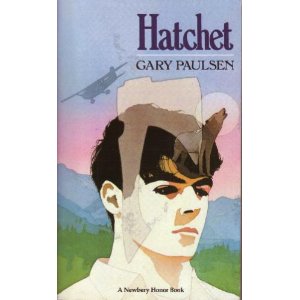
With a cover like this, can you blame me? Image via amazon.com

Hatchet, by Gary Paulson. It was about a boy who was stranded in the woods in the middle of nowhere after a plane crash. I remember long accounts of shelter-building and being very bored indeed.

White Fang, by Jack London. Seriously, the only thing I remember about this is descriptions of blood and violence. And it’s hazy enough that these may be just my lasting impressions rather than actual memories of scenes in the book.

Where the Red Fern Grows, by Wilson Rawls. I remember sitting in the classroom during silent reading time and trying very hard not to cry, and not succeeding. If you can read this book without crying, you may be entirely heartless.

To Kill a Mockingbird, by Harper Lee. This is one of the few books assigned that I actually enjoyed, and it is perhaps one of the first books I read that, once I came to the end, I sat in awe for a few minutes to think about it. It’s still on my list of favorites.

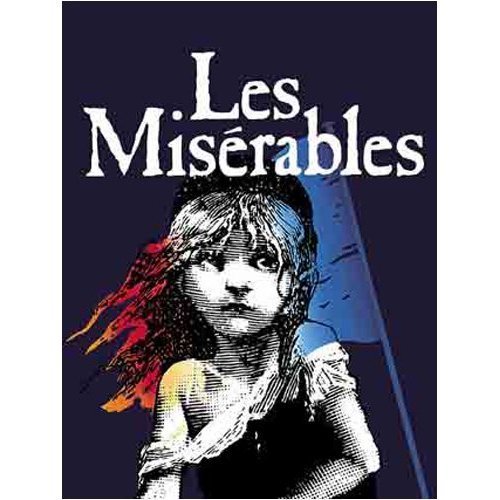
Cosette, or the Little Matchgirl? You decide. Image via amazon.com

Les Miserables, by Victor Hugo. My principal memory is of sitting in my parents’ living room on a Sunday afternoon and finishing the novel, and my parents finding me weeping, which they seemed to find hilarious. These same parents had a copy of this novel on audio cassette, and I can remember how it almost always went with us on road trips. For whatever reason, I had it confused for the longest time with the “little matchgirl” story, because the picture on the front was how I imagined the little matchgirl to look. So you might say I remember hearing this story long before I understood it.

The Heart of Darkness, by Joseph Conrad. In his dedication to Good Poems, Garrison Keillor said, “To all the English teachers, especially the great ones”, and it is only because of one of those great English teachers that I will never forget this book, for more reasons than I probably have time to tell tonight. Thanks, Mr. Robertson.